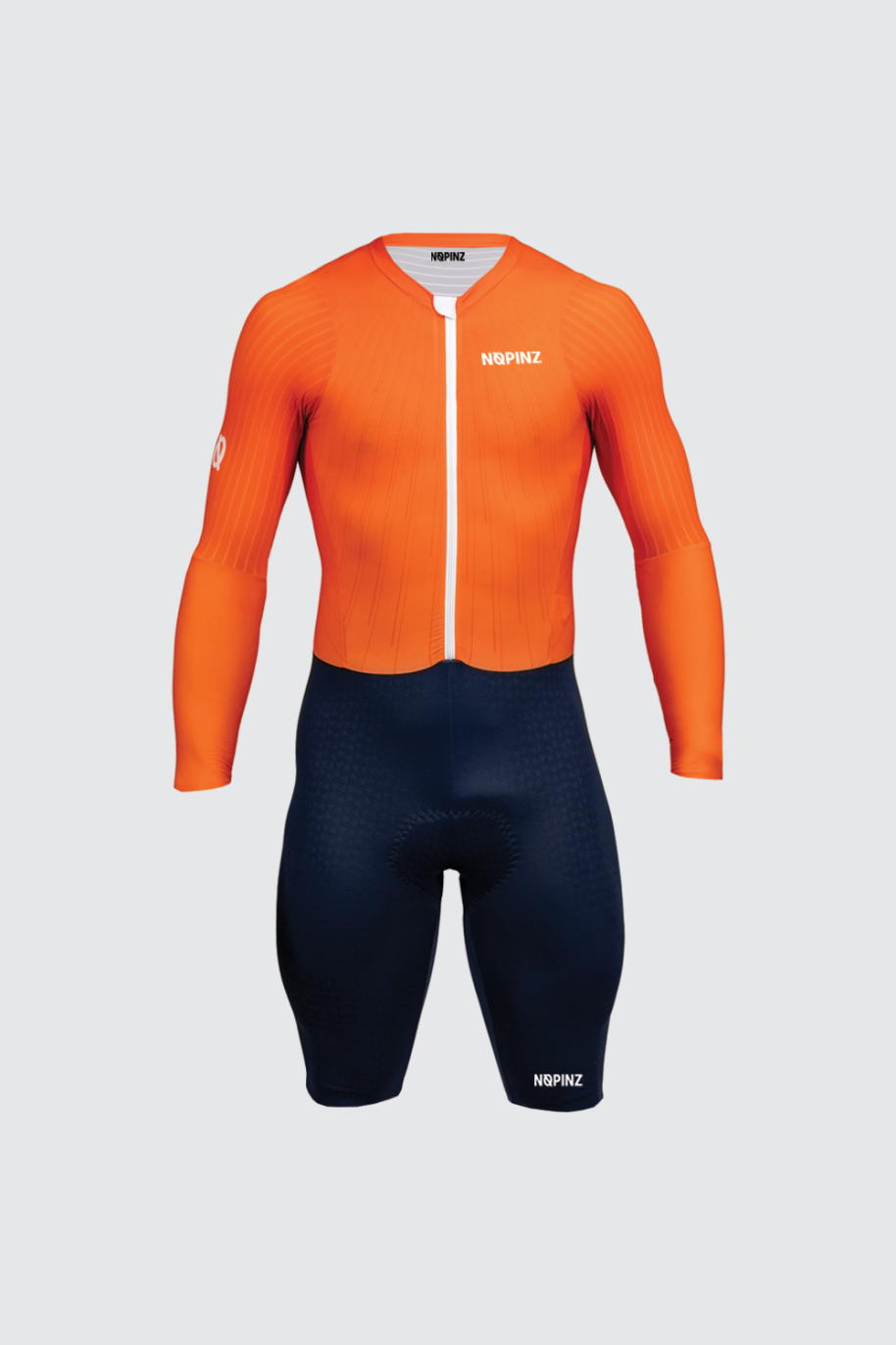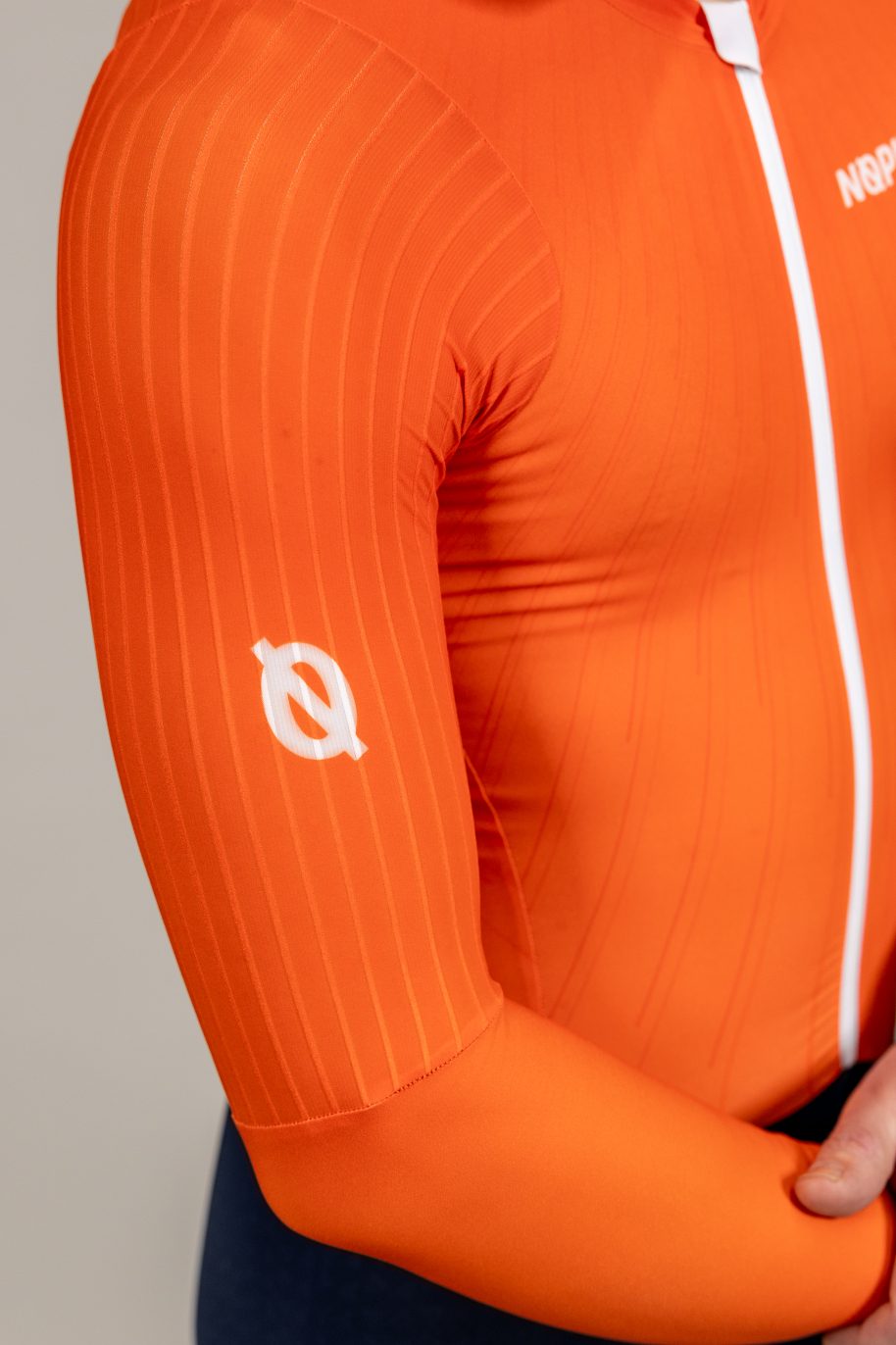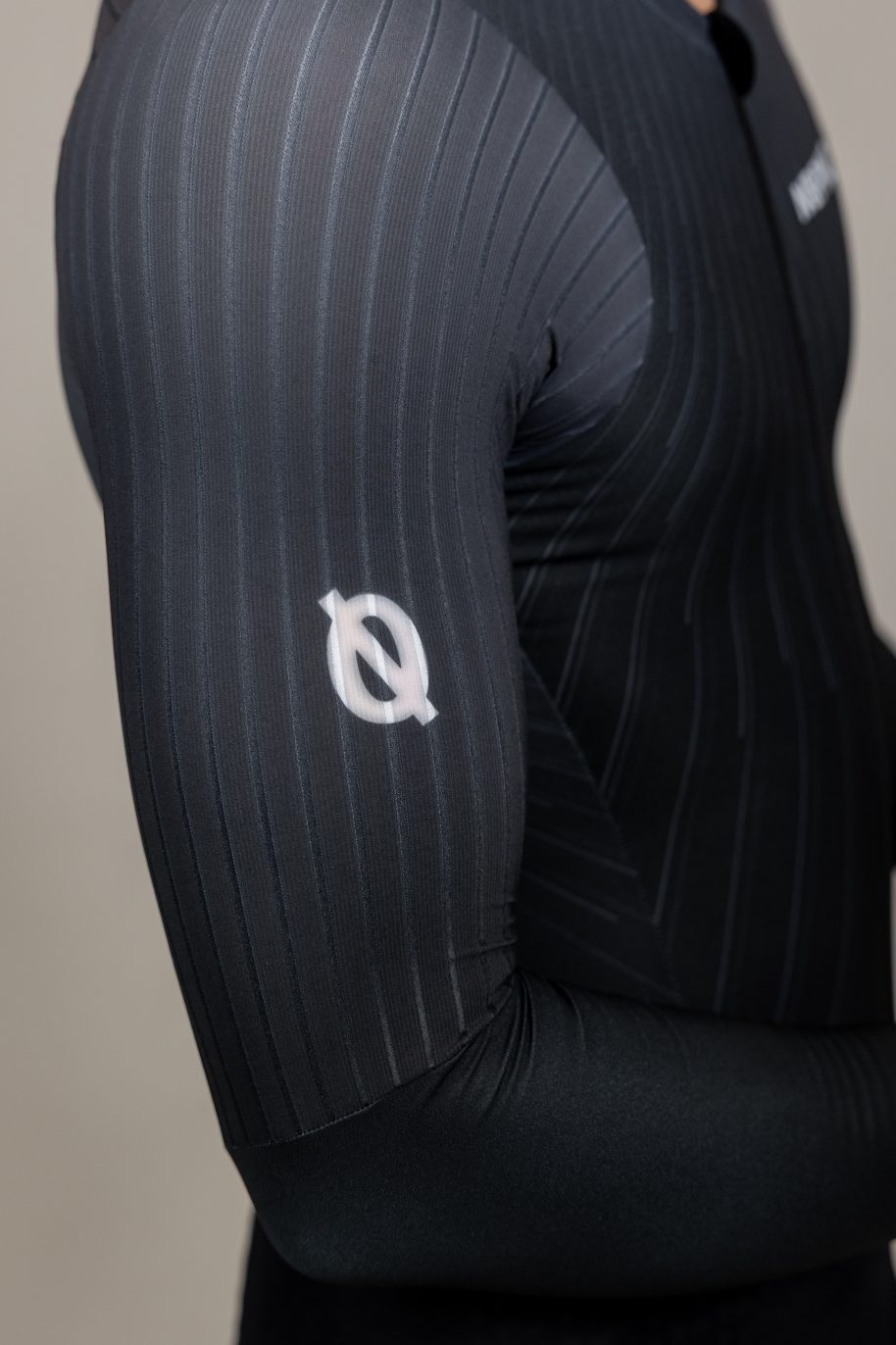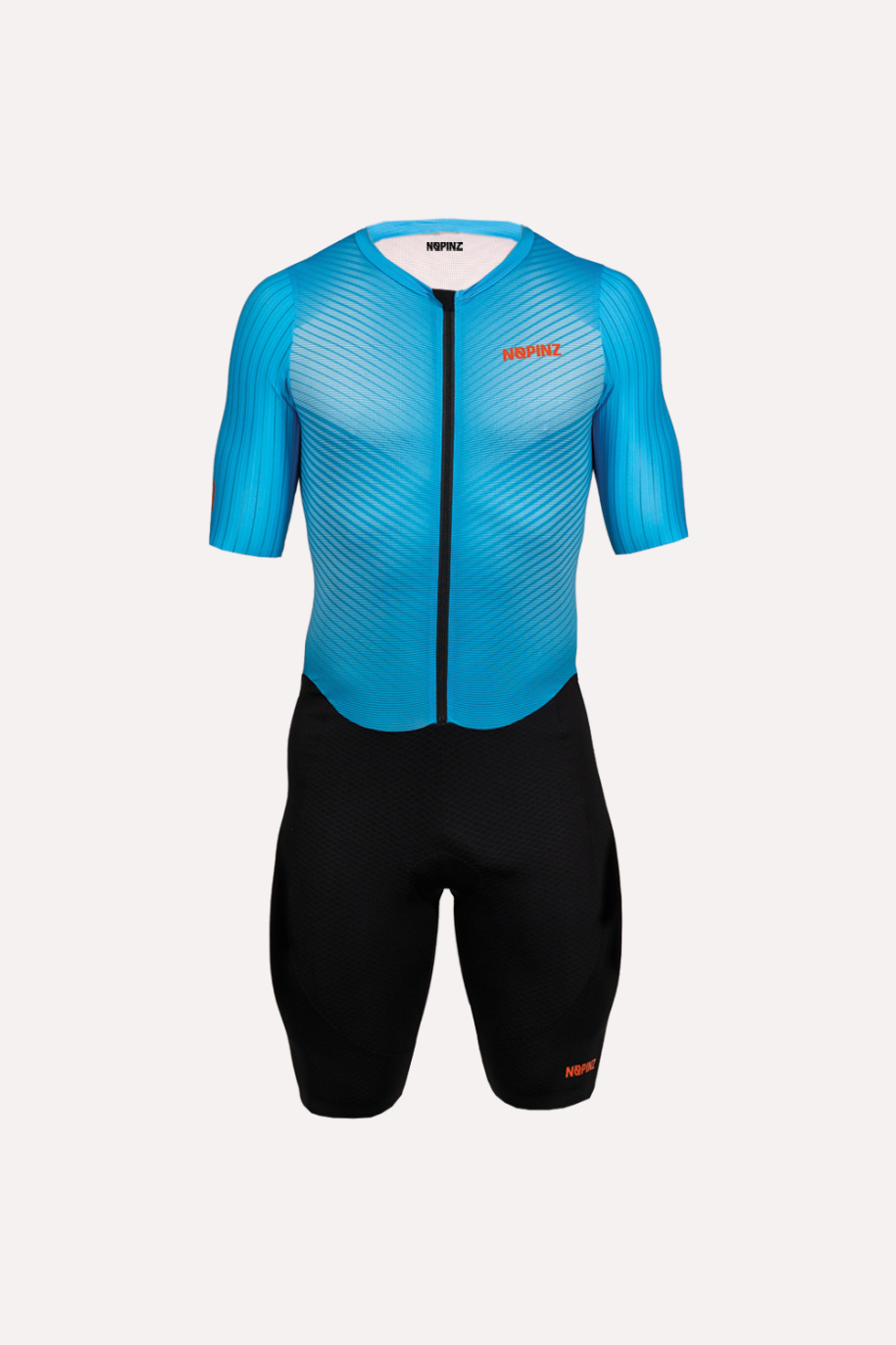
Not all aero data is equal. Learn how Nopinz turns wind-tunnel results into real-world speed — where it really counts.
Bridging the Gap
Written by James Witts, content writer for Nopinz.
Wind-tunnel testing is omnipresent in cycling. But how do you know manufacturers don’t cherry-pick the results for sensationalism over substance? At NoPinz, they’ve used the tunnel for over 12 years and perfected their protocol so that your apparel is fast not only in the tunnel but where it really counts: on the open road…

The Most Important Metric
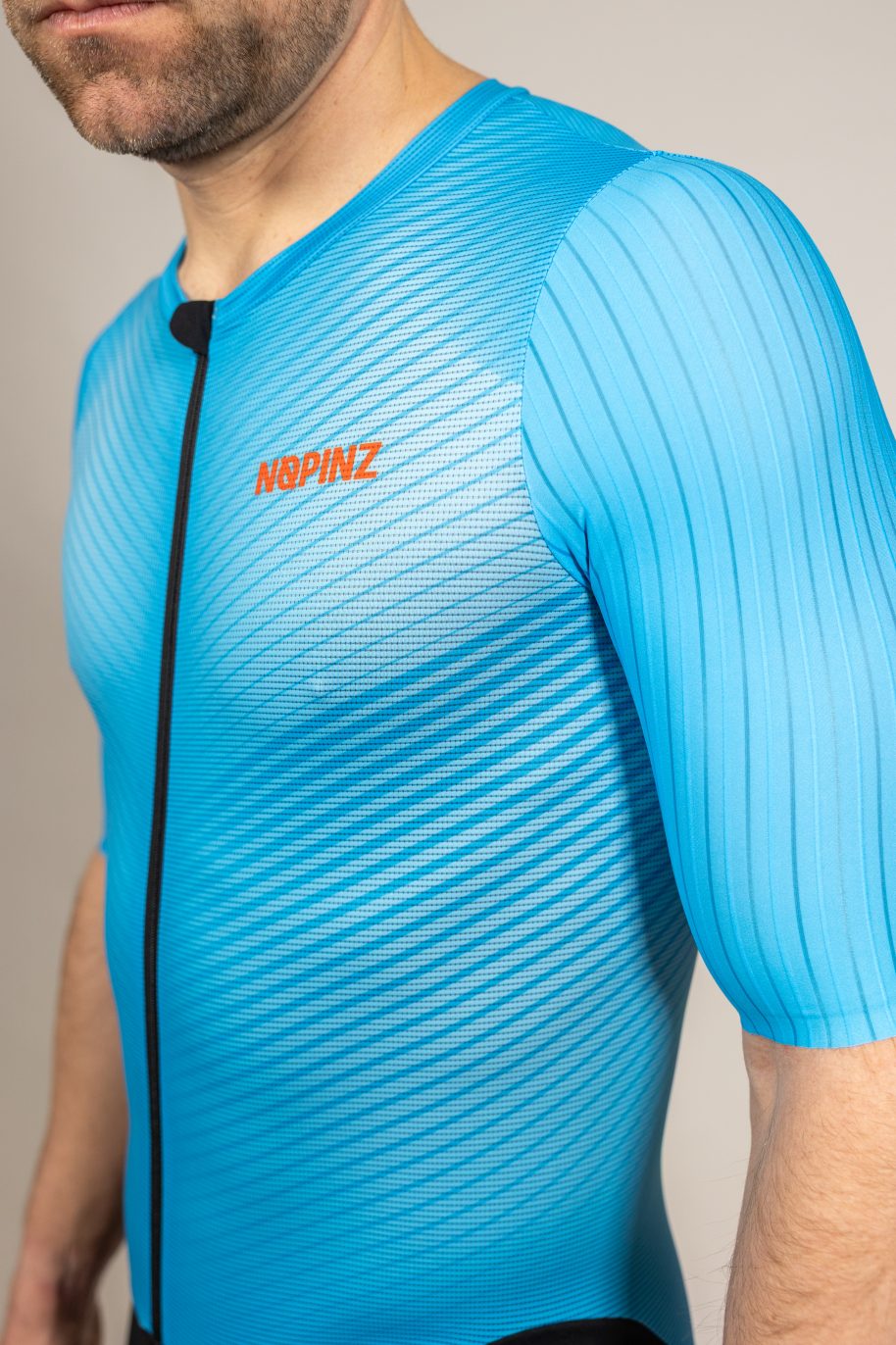
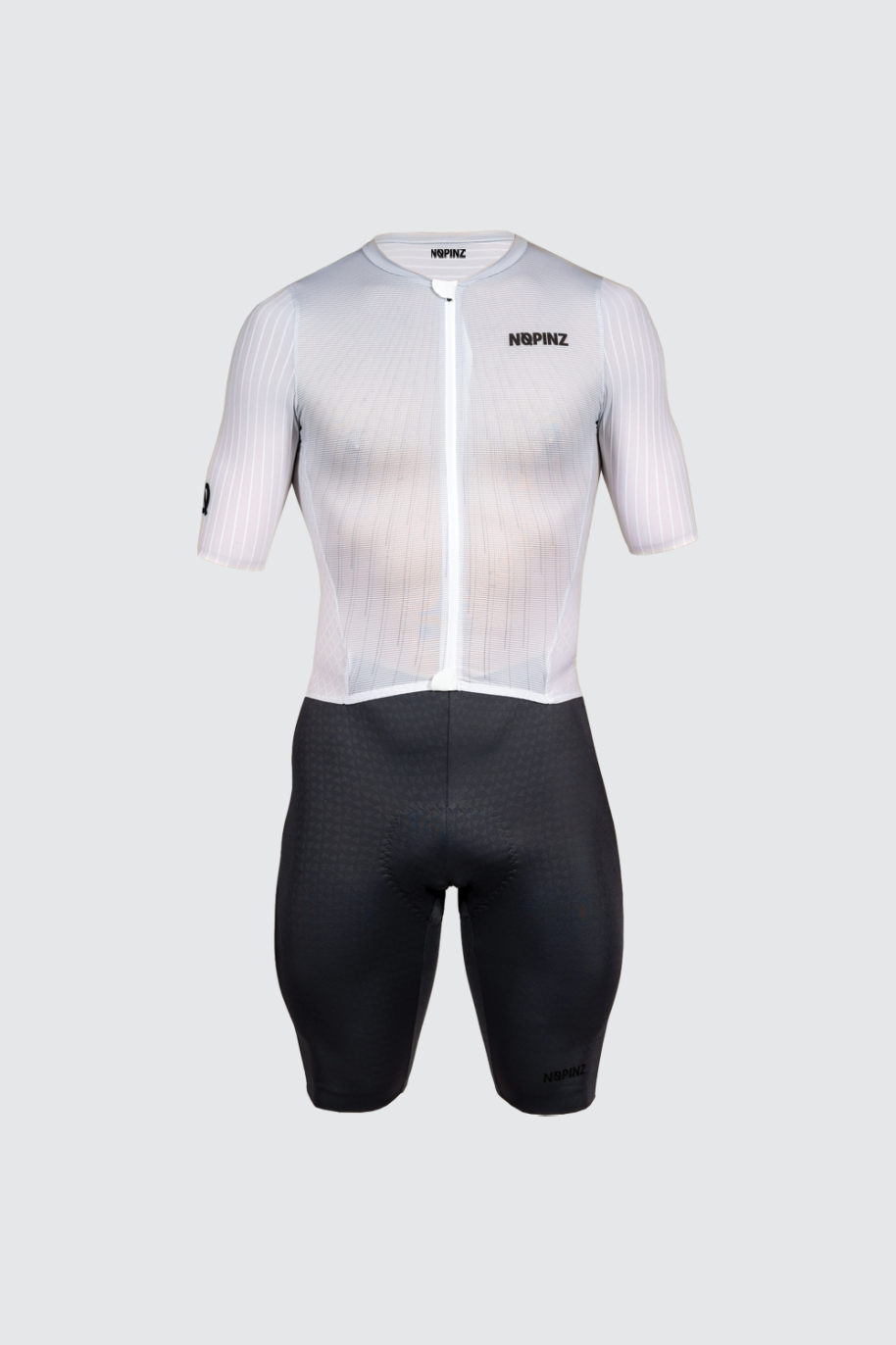
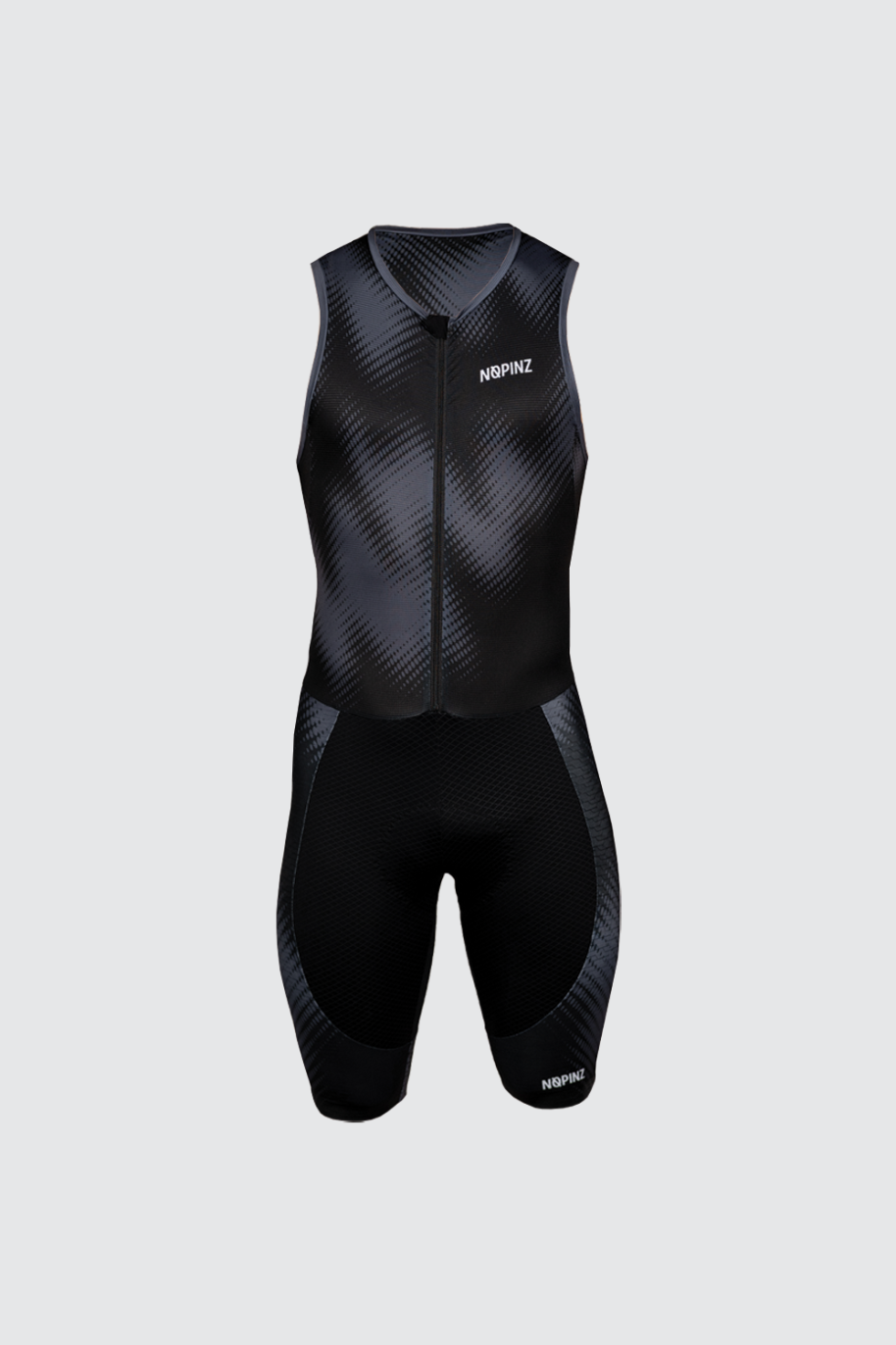
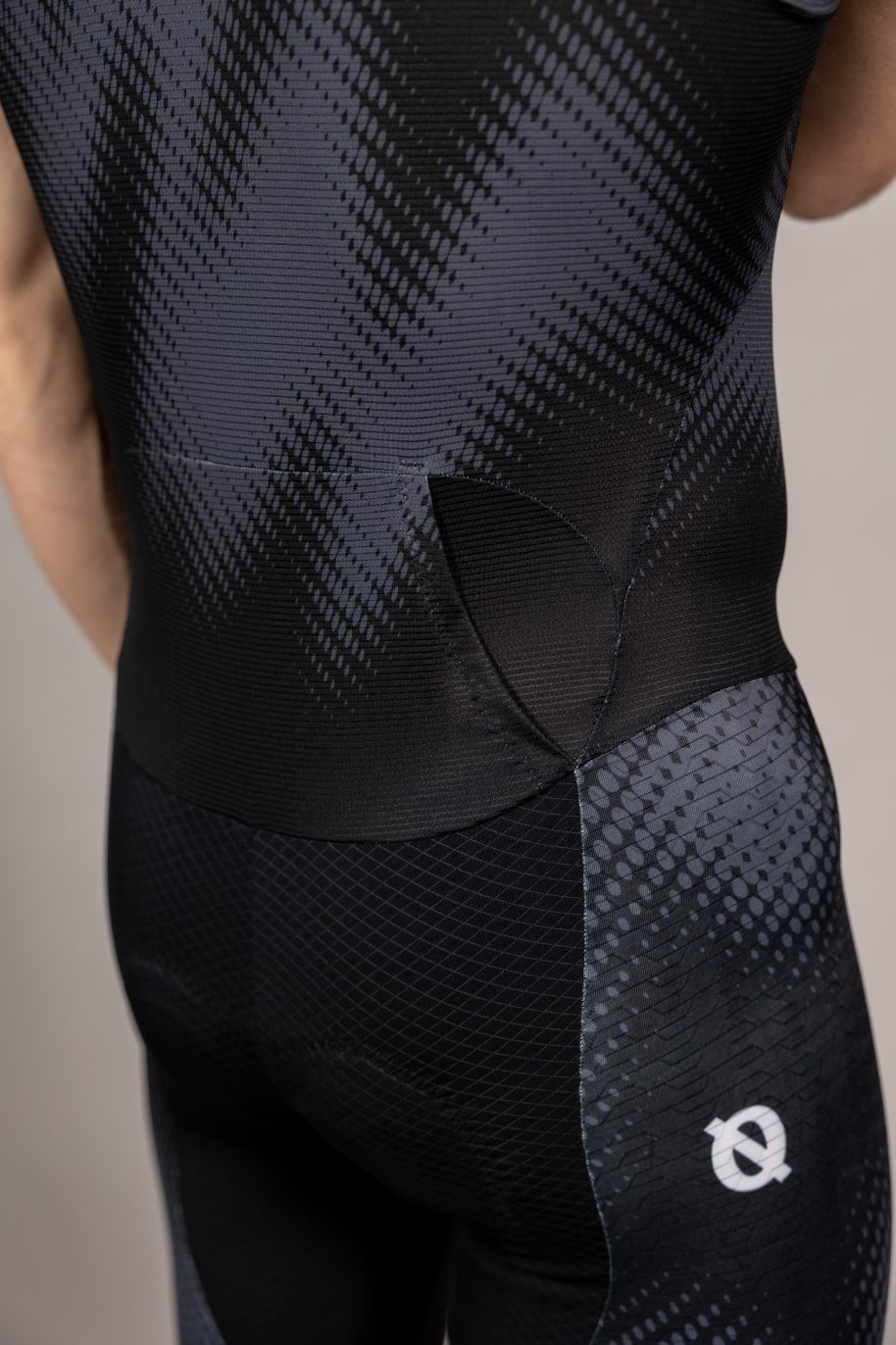
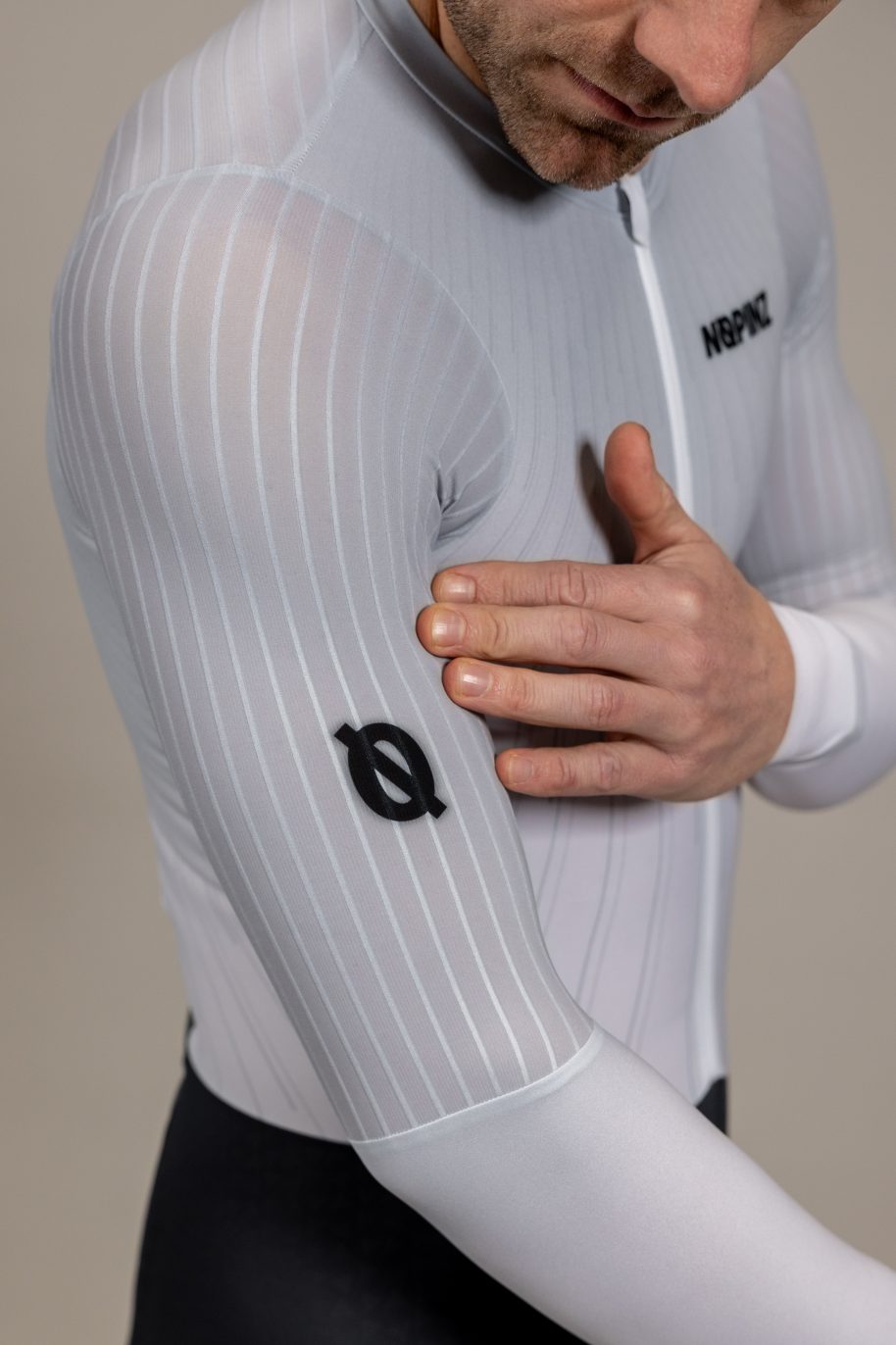
Where once weight dominated the cycling narrative, now it’s all about aerodynamics, whether that’s easing into a torpedo-like position, smoothing out airflow with deep-rim carbon wheels, slipping into a drag-defeating speedsuit like Nopinz’s Hypersonic Speedsuit or, if your bike’s sandwiched between a swim and run, Nopinz’s Pro-1 Evo Trisuit. It’s an aerodynamics arms race out there and is why manufacturers are at pains to claim their gear is slippier and speedier than their rivals.
And how do they convince the speed-seeking cyclist and triathlete of their aero credentials? Simple, add a wind-tunnel seal of scientific approval to each advert, proclaiming that their game-changing aero evolution is ‘X%’ faster than the competition. Kerching! Sale made, which is great for the seller but less so for the cyclist. You see, while it’s true that wind tunnel time is an essential component in creating the most aerodynamic and fastest gear around, it’s not if the testing conditions don’t mimic real-world conditions as accurately as possible.
It’s all very well a manufacturer saying their gear is fastest at 50km/hr at a 10° yaw angle, but who amongst us can hold this speed in the same position, for every pedal stroke, every second, on a busy, potholed, undulating dual carriageway with cars and lorries passing you at 70mph while a fierce crosswind batters from you first east and then, after a 180 turn back to the start, west? The reality is that you accelerate, decelerate, twist and turn en route to what you hope will be a PB. Now, ask yourself, how that set 50km/hr figure relates to your local ride? It doesn’t. This is why NoPinz believe their wind tunnel testing is the most credible around.

Testing Across Many Speeds and Yaw Angles
“We’re transparent and know that when you ride out on the road, be it in a time trial or a road race or ride, you never stay at one speed and one angle. That’s clearly impossible in the real world. So, to say a suit is the fastest based off one metric and scenario is misleading the customer,” says Nopinz founder and ex-elite roadie and time-triallist Blake Pond.
“That’s why when we hit the wind tunnel, we test our suits across a range of speeds and yaw angles that we feel our community is riding at and then calculate the average CdA across the board.
It’s why we test at 40, 45, 50 and 55km/hr across yaw angles 0, 3 and 7.5°, speed.”
For Nopinz, it matters not if a suit is fastest at, say, 50km/hr and 2° yaw. In isolation, that simply doesn’t transcend to real-life riding. Even the best time triallists can’t stick to one speed and one yaw angle. “The only scenario I can think of where that is more applicable is track racing,” says Pond.
Which is arguably how Team GB came to dominate Olympic track cycling. Everything’s so controllable – no wind, set temperature… – that specific speed and yaw data from the wind tunnel transfers well to the velodrome. That played into the hands of the data-crunching and meticulous Sir Dave Brailsford when he became British Cycling’s performance director in 2003. Thanks to his legendary marginal-gain approach, it was relatively simple to identify and improve areas like CdA in the very controlled environs of the track. Which paid off big time.
In 2004, the team won two gold medals on the track thanks to Sir Bradley Wiggins (individual pursuit) and Sir Chris Hoy (sprint), their best performance since 1908. Under Brailsford’s leadership, they then won an unprecedented seven gold medals at both the 2008 Beijing and 2012 London Olympics, before Brailsford left to focus on leading Team Sky.
Anyway, we digress. In short, in Nopinz’s opinion, a sole wind tunnel scenario is not representative of real-world riding.

Input from an Aero Legend
This real-world philosophy is why Nopinz’s wind-tunnel protocol is broken down into three distinct yaws. “0° yaw represents a head-on wind, with 3° and 7° yaw representing head/crosswinds,” says Pond. “Alex Dowsett devised this protocol for us to be more representative of real-world riding.”
Which, for those unfamiliar, Alex Dowsett was one. In his professional career, 2010 to 2022, Dowsett raced for five teams including Team Sky, Movistar Team and Team Katusha-Alpecin. He was a time-trial specialist and in 2015 broke track cycling’s hour record with a distance of 52.937km. Allegedly, Dowsett was born and raised in a wind tunnel, his first baby grow featuring slipstreaming seams and close-knit weave. There’s little the Brit doesn’t know about aerodynamics, making it something of a NoPinz coup that he’s an investor and ambassador.
As for wind-tunnel speeds, Nopinz tests across 40, 45, 50 and 55km/hr. “In the last set of data, we slotted in 40km/hr because we’re creating more triathlon and road-racing products now,” Pond says. “Generally, the speeds associated with triathlon are a little slower, understandably so because of the run afterwards. We also assessed the club time-trial scene and know that 40km/hr is a great speed for a rider to achieve, especially for female riders. That relates to around a 24 minute 10-mile time trial rather than around 18 to 20 minutes for incredibly fast riders.
Wind-Tunnel Standardisation… and Sweating
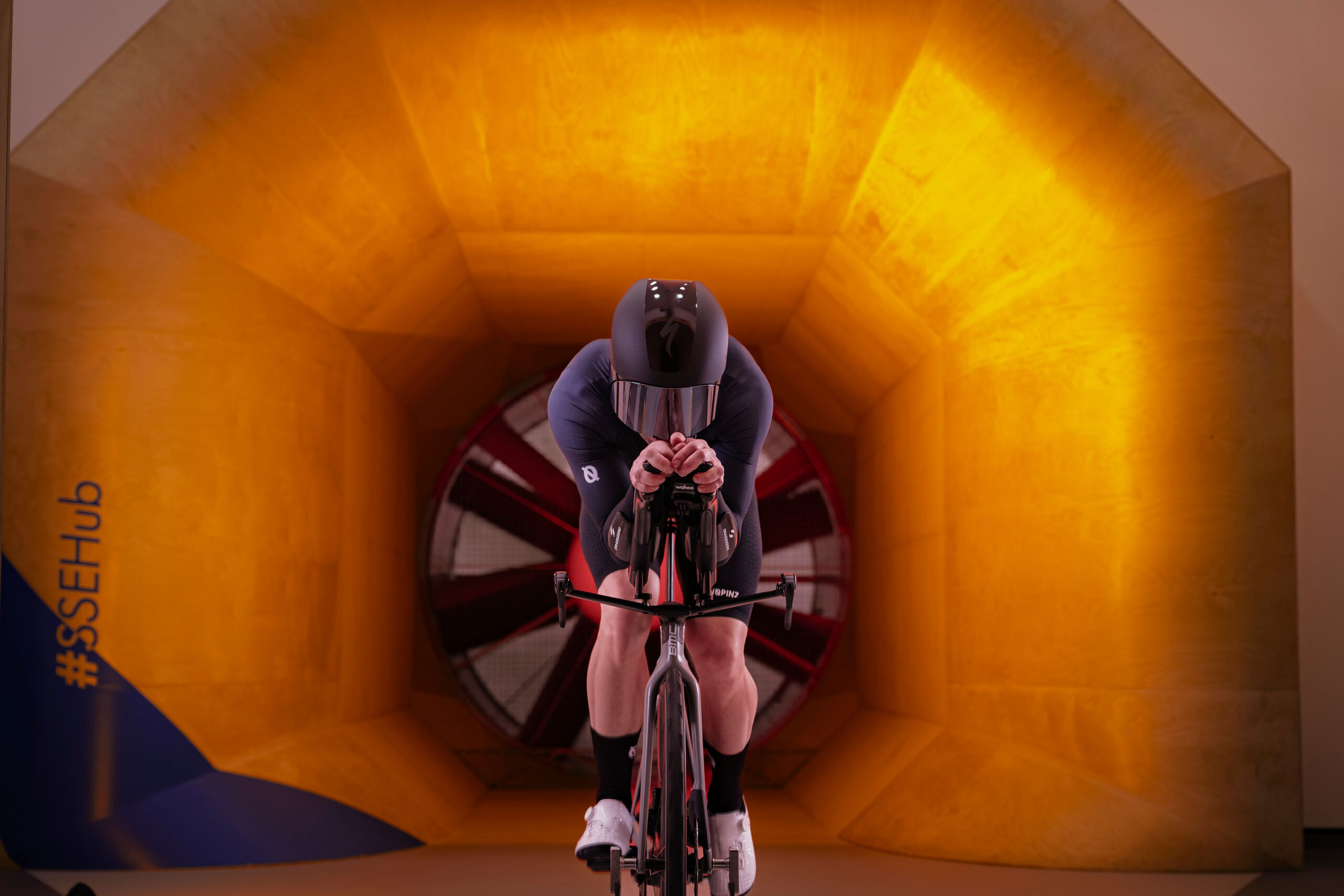
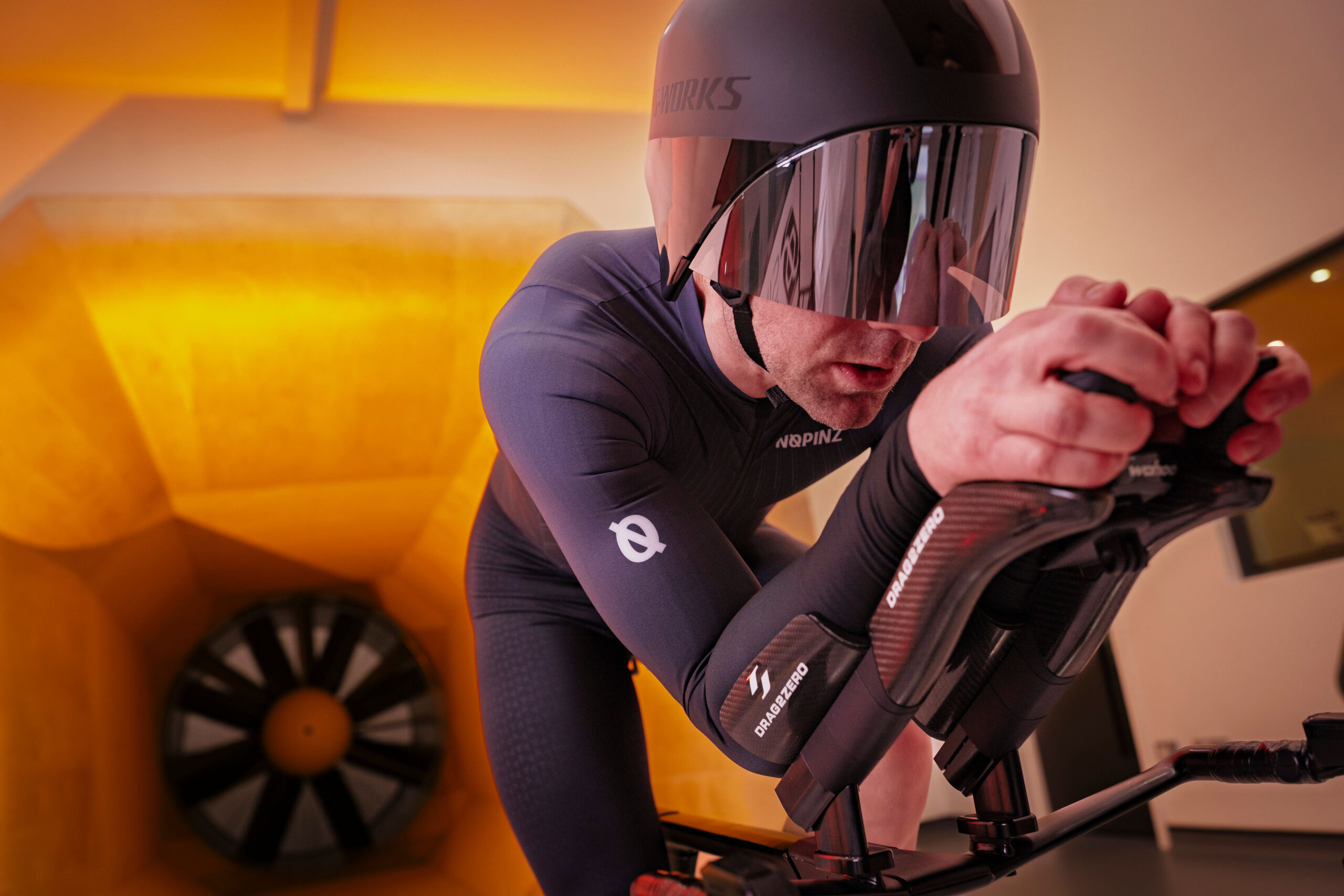
Nopinz’s testing takes place at the gold standard of UK wind tunnel, Silverstone, which they use at the start and end point of product development. Back to Pond… “The first step is coming up with a new-suit concept. We always have ideas floating around, whether that’s changing certain panels on the suits to different fabrics or introducing completely new templates for garments. We’ve been going to the wind tunnel for over 12 years now, so we’ve built up a lot of data and knowledge around going fast.
“We’ll make prototypes based on those ideas. We feel this gives us a competitive advantage as we design in-house here in Barnstaple [North Devon] and manufacture the club and custom kits here, too. It means we make the prototypes here, which is far more efficient than many companies who may have to wait for prototype designs to come back from another country.
“Then we hit the tunnel. When we last visited, as an example we took multiple speedsuit prototypes, one of which will become the new Hypersonic Triathlon Suit. We had a base template and swapped out fabrics, as we were looking for the best-performer at 40-45km/hr, which are the speeds we expect the athletes to average in this category.”
Naturally, some of the designs or fabrics are slower – a higher CdA – so the team learn from those failures and refine the product based on that data gathered, before returning to the wind tunnel with final samples to ratify the results. If everything performs as expected then the new product is released to you, the performance-hunting cyclist or triathlete.
Investing in Faster Real-World Riding
All of this, of course, is a significant investment, both fiscally and physically. “The more speeds and more yaws you do inevitably takes longer,” says Pond. “Take last September where we took many prototype skinsuits , trisuits, plus some lower-leg stuff like Hypersonic Calf Guards it took two days to test everything. Wind tunnels are cheaper and more accessible than they once were but the last two-day stint still cost £5,000. Throw in accommodation at Silverstone and what-not and you’re talking six grand. But that’s what’s needed if you’re looking for credible, real-world results and not just to tick boxes and take some images.”
“The testing’s also pretty tiring,” adds Pond. “Our test models are either Alex [Dowsett] or myself, with the other one offering guidance on factors like position. I think the pedalling time came in at nine hours over 51 runs.”
The fatiguing nature of those nine hours pedalling over two days – aka, the world’s most expensive training session at £6,000! – is compounded by standardising test runs for accurate results.
“You can choose to have resistance on the rollers in the tunnel or not,” says Pond. “I like to have a bit of resistance for every run as it’s more realistic, especially when holding the aero position. And when it comes to position, well, that’s one of the hardest things to maintain. But, again, you must be consistent not to distort the results.”
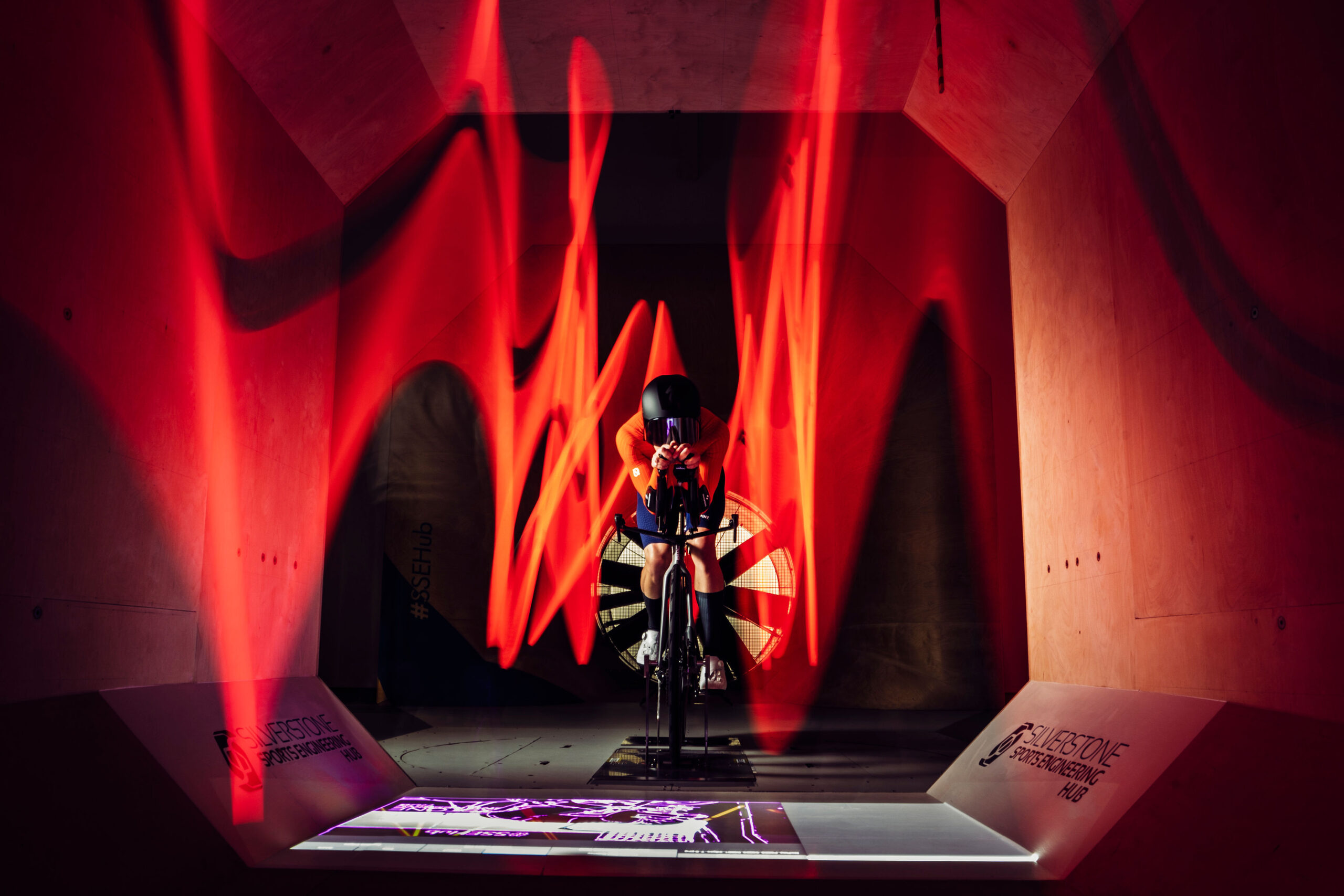
To that end, outlines are projected onto the tunnel floor that the tester – in Nopinz’s case, Pond or Dowsett – must keep within. “That’s fine at the start but does become harder the longer testing goes on. You also sweat an inordinate amount, despite the breeze from the massive fan!”
Other standardised metrics across the myriad yaw angles and speeds are cadence – 90rpm as “most people ride between 80 and 100rpm. If your legs quicken up or slow right down, it affects the drag numbers” – and helmet choice. “Helmets interact differently with different suits and different body shapes, so we tend to use our own helmets that we know are best on us,” says Pond. “Dowsett will always use the S Works TT5 helmet, as that’s his fastest helmet. Last time out, I used that one, too, as it tested fastest on me.”
It’s the same standardised protocol whether NoPinz tests products for time trial and triathlon, or road riding. “Obviously we’ll be down on the extensions when testing the former and on the tops of the hoods with arms fairly flat for the latter. On the road bike, while you go as low as possible, that position must be repeatable and sustainable. You just wouldn’t stay on the drops for hours on end. It’s not a one-run wonder!”
It all amounts to a major amount of planning, designing, testing, sweating, refining and repeating before the respective speed-seeking garment goes live. It’s why you can rest assured that if you buy a Nopinz product, your speed returns will pay off handsomely because NoPinz is all about creating garments that optimise your performance in the real world. “Ultimately, when you look at wind tunnel data, think how that relates to your real-world performance, to your local course,” Pond concludes.
“That’s why we present our data like we do. We’re trying to make our products as applicable and accurate to real riding as possible….It’s not just a sales pitch!”
– This post was written by James Witts.
James Witts is a writer who specialises in endurance sport and sports science. He has three books on his palmares including The Science of the Tour de France and Riding with the Rocketmen. He also writes for a broad range of consumer publications including Rouleur, Cyclist, The Observer and 220 Triathlon.